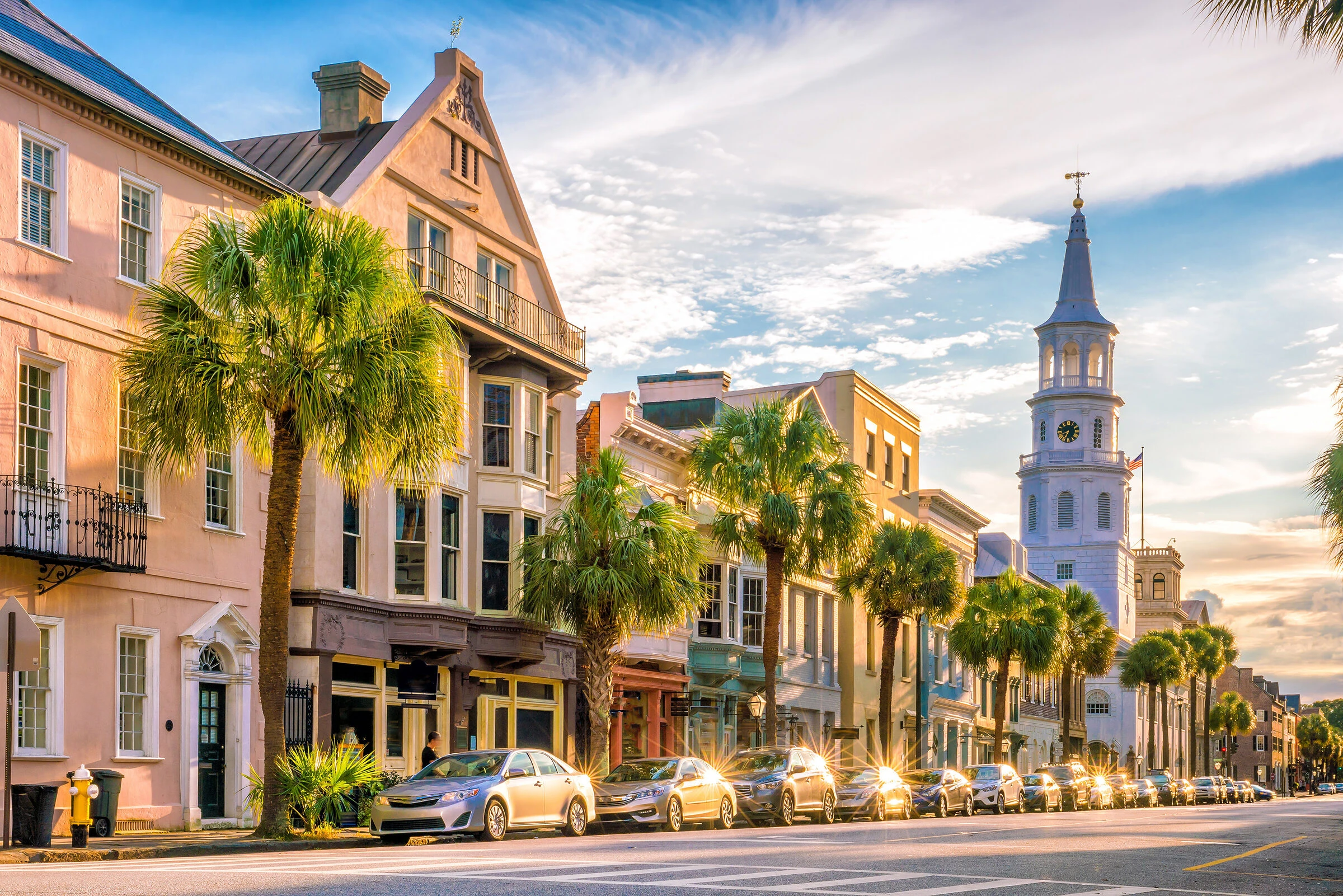
There's something about Charleston that stops you in your tracks. Maybe it's the Spanish moss draping from ancient oak trees. Maybe it's the way the light hits the pastel historic homes at golden hour. Maybe it's the fact that you can't walk three blocks without stumbling onto something delicious.
Or maybe it's all of it—the way history, beauty, food, and Southern hospitality come together in a city that somehow manages to feel both elegant and laid-back at the same time.
Charleston isn't just charming (though it absolutely is). It's also complex, layered with stories.
Here's how to experience Charleston's magic—the beauty, the history, the food, and everything in between.
Why Charleston in Winter?
December through February is actually a sweet time for Charleston. The oppressive summer heat and humidity are gone, replaced by mild days (50s-60s) and crisp evenings perfect for strolling.
Bonus: Hotel rates drop after the holidays, and you won't be battling cruise ship crowds or peak tourism season. The city still has that holiday glow in early December, but without the chaos.
The Historic District: Where Time Moves Slowly
Charleston's Historic District is what draws most people here, and for good reason. This is where you'll find those iconic Rainbow Row houses, the cobblestone streets, the church steeples, and the meticulously preserved architecture that makes you feel like you've stepped back 200 years.
Walking Tours Worth Taking
Bulldog Tours Historic Charleston Walking Tour
A great overview if you're visiting for the first time. Covers architecture, history, and those stories that make Charleston come alive.
Gullah Tours
This is essential. The Gullah people are descendants of enslaved Africans who maintained their cultural traditions in the Lowcountry. These tours offer insight into Gullah history, language, and contributions—context you won't get from standard historic tours.
Food Tours
Charleston Culinary Tours and Bulldog Food Tours both offer excellent walking food tours. You eat your way through the city while learning about its culinary history. It's delicious research.
Pro tip: Book walking tours for the morning. Charleston's pace is slow and deliberate—save your afternoons for wandering, eating, and soaking in the atmosphere without a schedule.
What to See (Beyond the Obvious)
Rainbow Row
Yes, it's touristy. Yes, you should still see it. These 13 pastel historic houses along East Bay Street are legitimately beautiful, especially in morning or late afternoon light.
The Battery & White Point Garden
Walk along the seawall, admire the antebellum mansions, watch boats on the harbor. It's peaceful, beautiful, and free.
St. Michael's Episcopal Church
The oldest church building in Charleston (1761), with a stunning white steeple that's basically Charleston's skyline signature.
Charleston City Market
Covered market with local artisans selling sweetgrass baskets (a Gullah tradition), art, jewelry, and souvenirs. It's touristy but also showcases local craftsmanship.
The Unitarian Church Graveyard
Tucked away and peaceful, with ancient oaks and headstones dating back centuries. It's hauntingly beautiful in the best way.
Plantations & Gardens: Lowcountry Beauty
The plantation estates around Charleston are stunning—grand homes, centuries-old oak alleys, beautiful gardens, and a window into the agricultural history that shaped the Lowcountry.
Boone Hall Plantation
Famous for its Avenue of Oaks—a three-quarter-mile driveway lined with massive live oaks planted in 1743. It's one of the most photographed sites in the South (you've seen it in The Notebook and other films). The house tours cover plantation life and architecture, and the grounds are gorgeous for walking.
Magnolia Plantation & Gardens
America's oldest public gardens (opened in 1870). The gardens are the real draw here—romantic, lush, with azaleas, camellias, and walking trails. Rent a bike or take a nature boat tour through the marshes.
Middleton Place
Oldest landscaped gardens in America, with terraced gardens overlooking the Ashley River. They also have a stableyards with heritage breed animals and craftspeople demonstrating historic trades. Quite peaceful and beautiful.
Drayton Hall
If you're into architecture and preservation, this is fascinating. It's one of the oldest unrestored plantation houses in America—no electricity, no plumbing, preserved exactly as it was. The tour focuses on architectural history and preservation.
Pro tip: These properties are spread out (20-30 minutes from downtown). Pick one or two based on your interests—gardens, architecture, photography—rather than trying to see them all.
The Food: She-Crab Soup, Shrimp & Grits, and So Much More
Charleston is a food city. A serious food city. You could spend a week here just eating and still not hit all the incredible restaurants.
Classic Lowcountry Cuisine
She-Crab Soup
Creamy, rich, made with blue crab meat and roe. It's a Charleston staple. Try it at Hank's Seafood or 82 Queen.
Shrimp & Grits
Every chef has their version. Some are traditional, some are elevated, all are delicious. Hominy Grill (RIP—it closed in 2019, but the legacy lives on) set the standard. Now try Husk or Fig for excellent versions.
Lowcountry Boil (Frogmore Stew)
Shrimp, sausage, corn, potatoes—boiled together and dumped on a table. It's communal, messy, and perfect.
Benne Wafers
Sesame seed wafers with African roots (brought by enslaved Africans). They're sweet, crispy, and distinctly Charleston. Find them at the City Market or bakeries around town.
Restaurants You Shouldn't Miss
Husk
Southern ingredients, elevated execution. The menu changes based on what's available locally. Fried chicken on Sundays is legendary.
FIG (Food Is Good)
Farm-to-table before it was trendy. Seasonal, locally sourced, consistently excellent.
Halls Chophouse
If you want a great steak in an old-school supper club atmosphere, this is it. Impeccable service, live music, Southern hospitality at its finest.
The Ordinary
Seafood-focused, raw bar, excellent cocktails. Sit at the bar and let the team guide you.
Rodney Scott's BBQ
Whole hog BBQ from a James Beard Award-winning pitmaster. It's casual, delicious, and essential if you love BBQ.
Leon's Oyster Shop
Fried chicken, oysters, and a laid-back vibe. Also: frozen rosé in summer (or anytime, really).
Cocktail Bars:
- The Gin Joint - Speakeasy vibes, craft cocktails
- The Macintosh - Hip, modern, excellent bar program
- Pavilion Bar at Market Pavilion Hotel - Rooftop views over the city
Breakfast & Brunch
Callie's Hot Little Biscuit
Buttermilk biscuits with various toppings. Get there early—they sell out.
Millers All Day
Brunch done right. Relaxed atmosphere, excellent food, and you won't wait two hours for a table.
Poogan's Porch
Southern brunch in a Victorian house. She-crab soup, biscuits, shrimp & grits—it's all here.
Beyond Downtown: Folly Beach & the Islands
Folly Beach
Laid-back beach town about 20 minutes from downtown. Not fancy, just good vibes, surf shops, and casual seafood spots. In winter, it's quiet and perfect for a beach walk.
Sullivan's Island
More upscale than Folly, with beautiful beaches and Fort Moultrie (Revolutionary War history). Home to Poe's Tavern, a burger joint named after Edgar Allan Poe, who was stationed at Fort Moultrie.
James Island & Johns Island
Less touristy, more residential, but home to Angel Oak Tree—a 400-year-old Southern live oak that's absolutely massive and worth the short drive.
When to Go
Best times:
- December-February - Mild weather, fewer crowds, holiday charm in early December
- March-May - Beautiful spring blooms, azaleas and wisteria everywhere, perfect weather (though spring break can be crowded)
- September-November - Gorgeous fall weather, oyster season, fewer tourists after Labor Day
Summer (June-August): Hot. Humid. Afternoon thunderstorms. If you can avoid it, do. But if you can't, lean into the AC, cold drinks, and slower pace.
The Lowcountry Experience
Charleston isn't just about checking off sights. It's about slowing down, savoring meals that last two hours, walking streets that have been here for centuries, and understanding the complex, layered history that shaped not just this city, but the entire American South.
It's about Spanish moss and sweet tea. She-crab soup and shrimp boats. Historic homes and gracious hospitality.
It's all of it, together, woven into a city that invites you to linger.
Inspired to experience United States?
Let us design a seamless, private itinerary tailored specifically to your group, pace, and passions.