The animals here never learned to be afraid of you.
There are no international flights to the Galápagos, and there probably never will be. That is not an inconvenience. It is the reason the islands are still what they are.
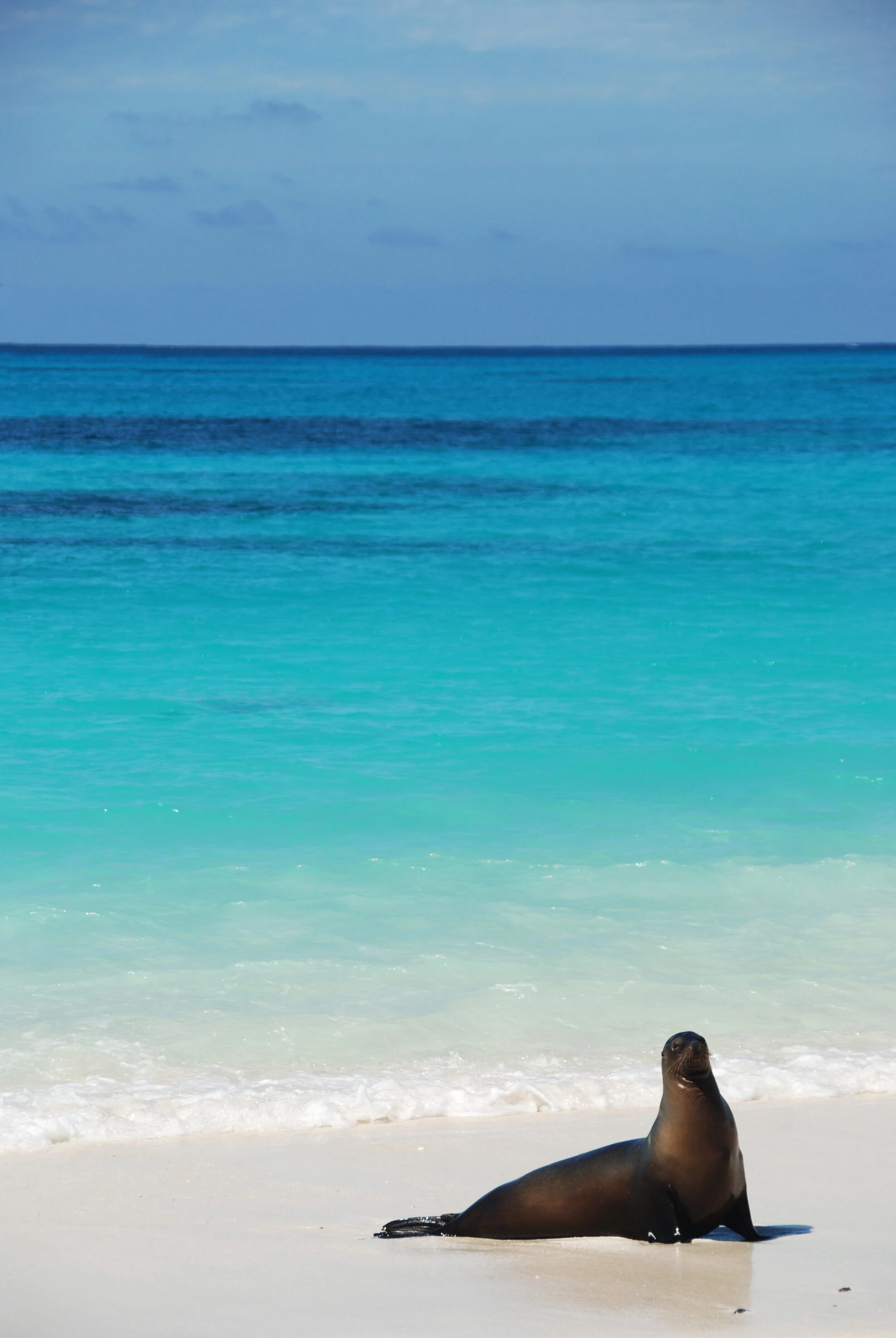
Everything arrives through Quito or Guayaquil, then onto one of two small island airports. Once you are there, a sea lion pup may swim up to your mask and look you in the eye. A hawk may land three feet away and be entirely unbothered. Penguins live on the equator here, and marine iguanas sun themselves on black volcanic rock like small dinosaurs.
Every visitor site, every vessel route and every guide ratio is set by the National Park. That is why the wildlife behaves this way, and it is also why planning the trip is more constrained than most people expect.
Getting the constraints right is most of the work.
Two airports, and they are not interchangeable: the islands are served by Baltra (GPS), next to Santa Cruz, and San Cristóbal (SCY). Booking a flight into Baltra when your vessel departs from San Cristóbal is one of the most common and most expensive errors in Galápagos travel, and the islands are not somewhere you can simply drive across. We confirm the embarkation port before any flight is ticketed.
Our published journeys work across three inhabited islands, each with a different feel and a different set of landings within reach.
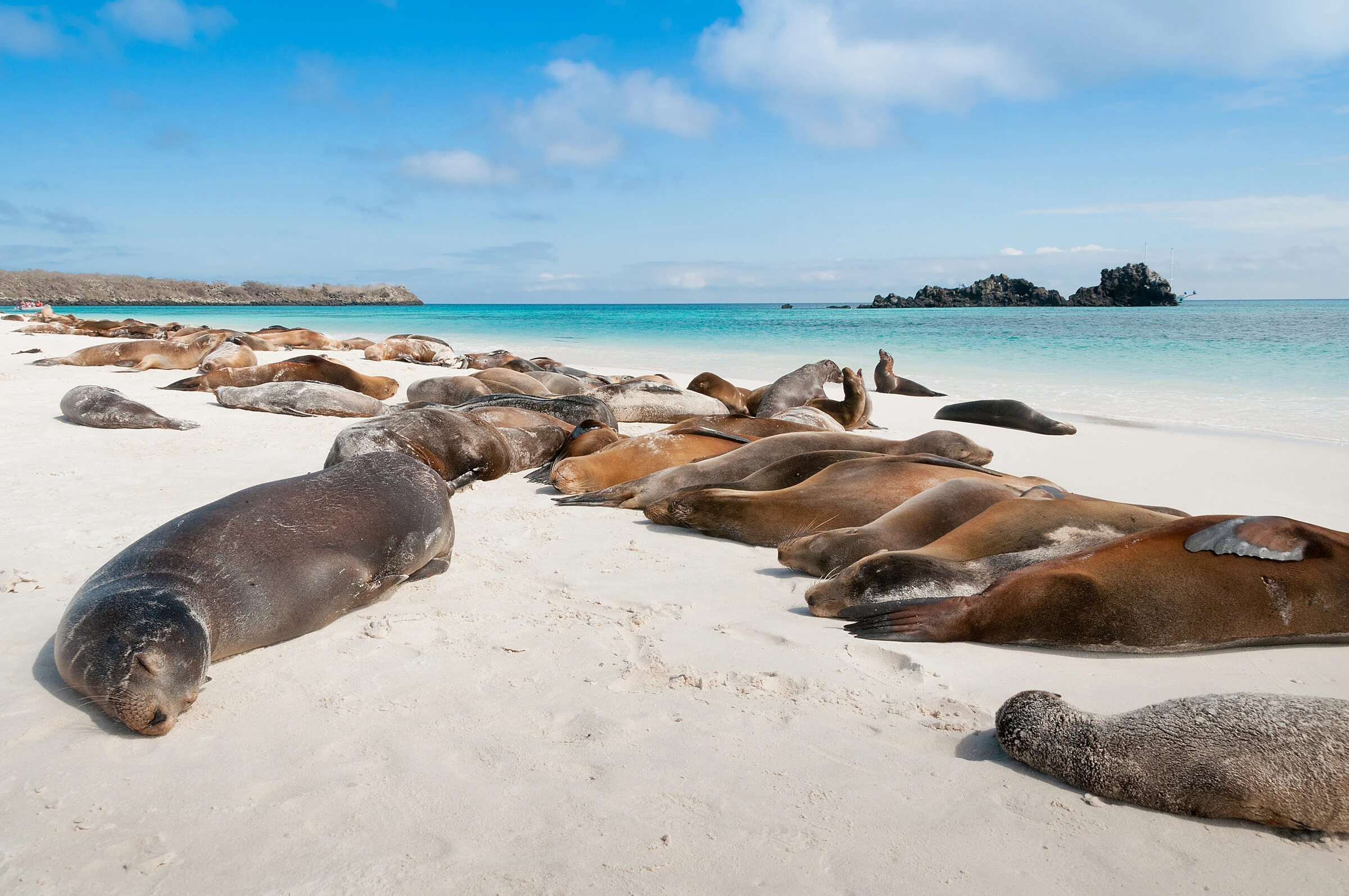
One of the two island airports, and the easternmost inhabited island. Kicker Rock sits offshore, a sheer volcanic tuff formation where you snorkel alongside sea lions and, in season, sharks and rays.
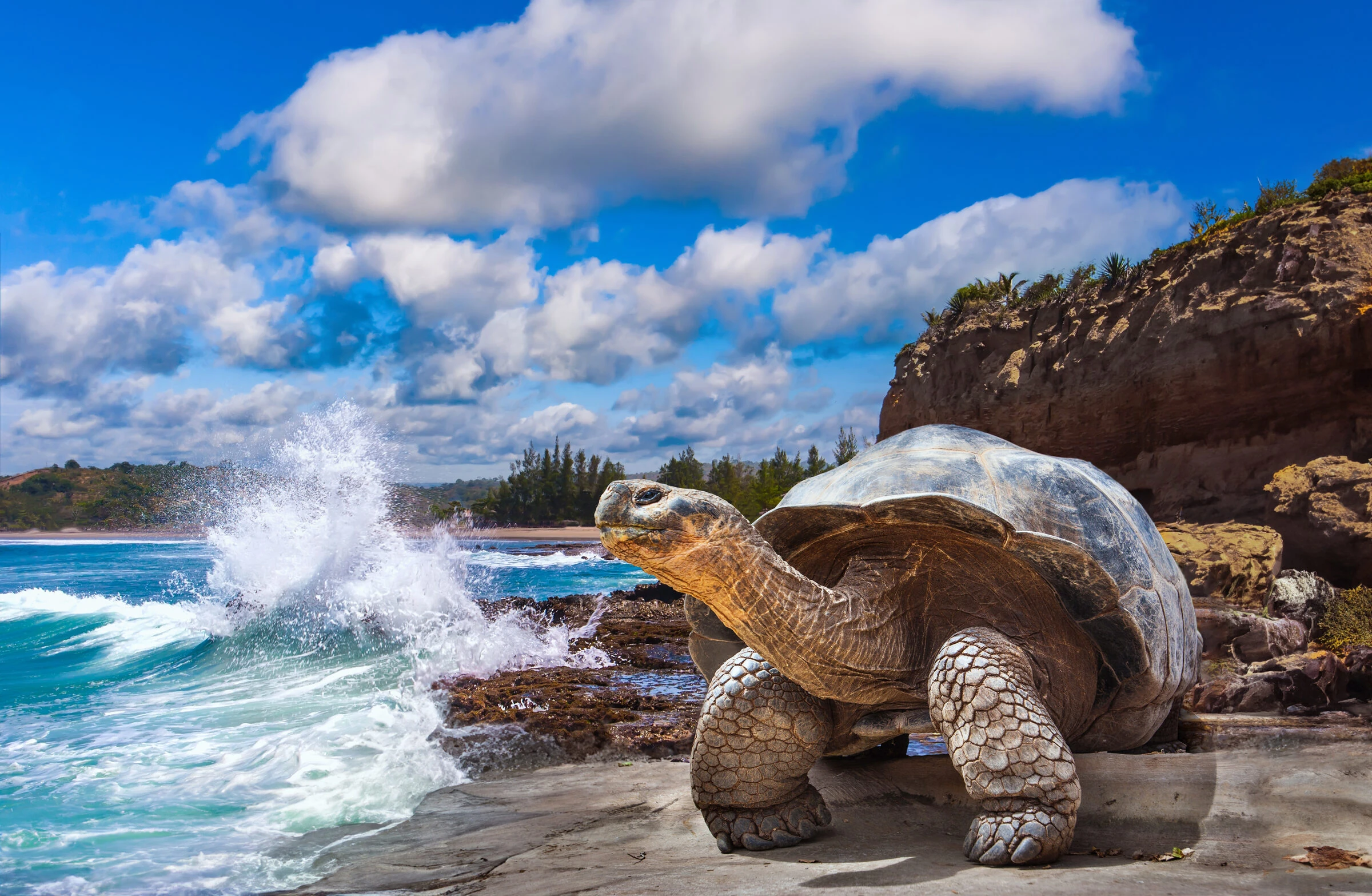
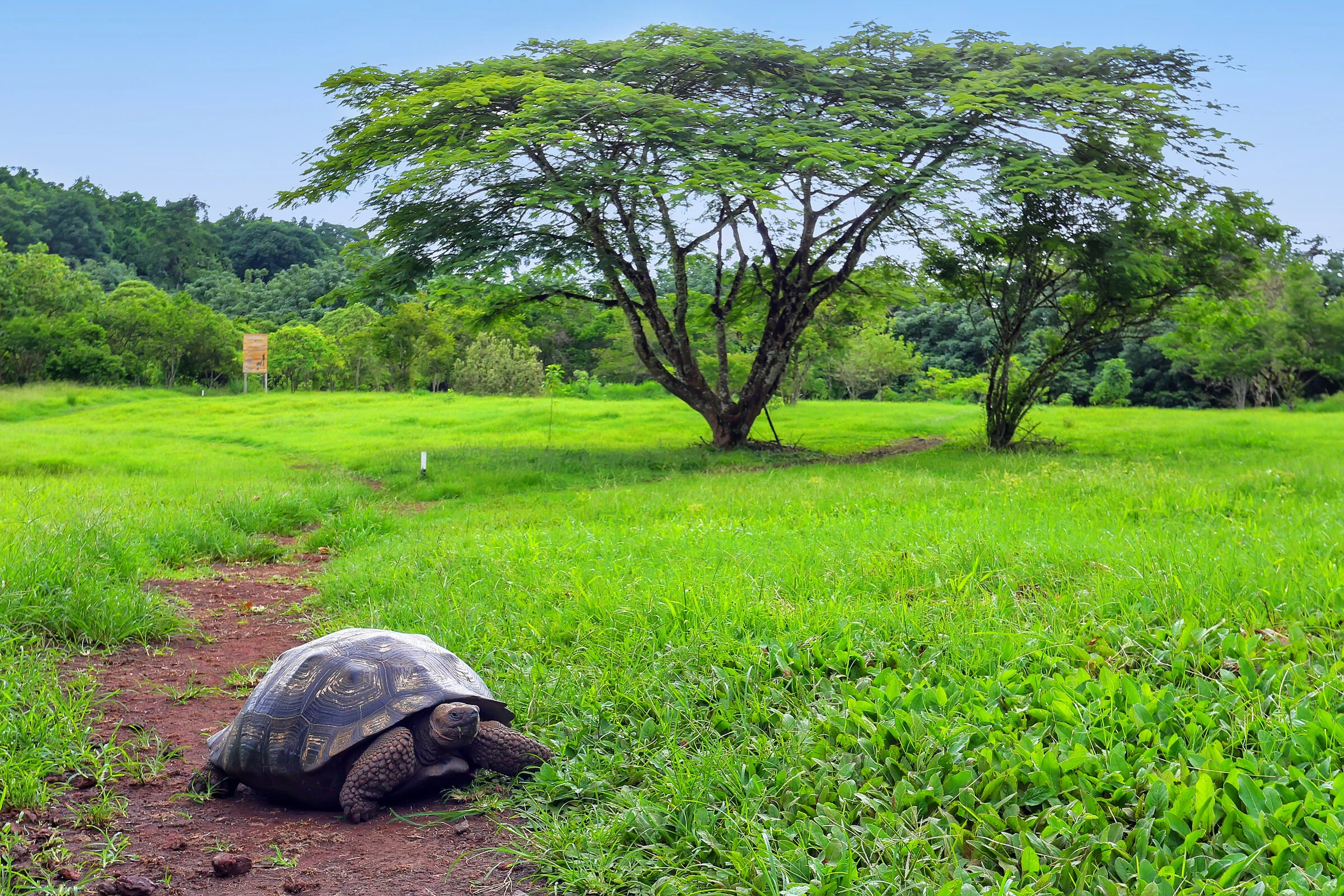
The most populated island and the practical hub. Wild giant tortoises move freely through the green highlands, and Tortuga Bay is a long white beach reached on foot rather than by boat.
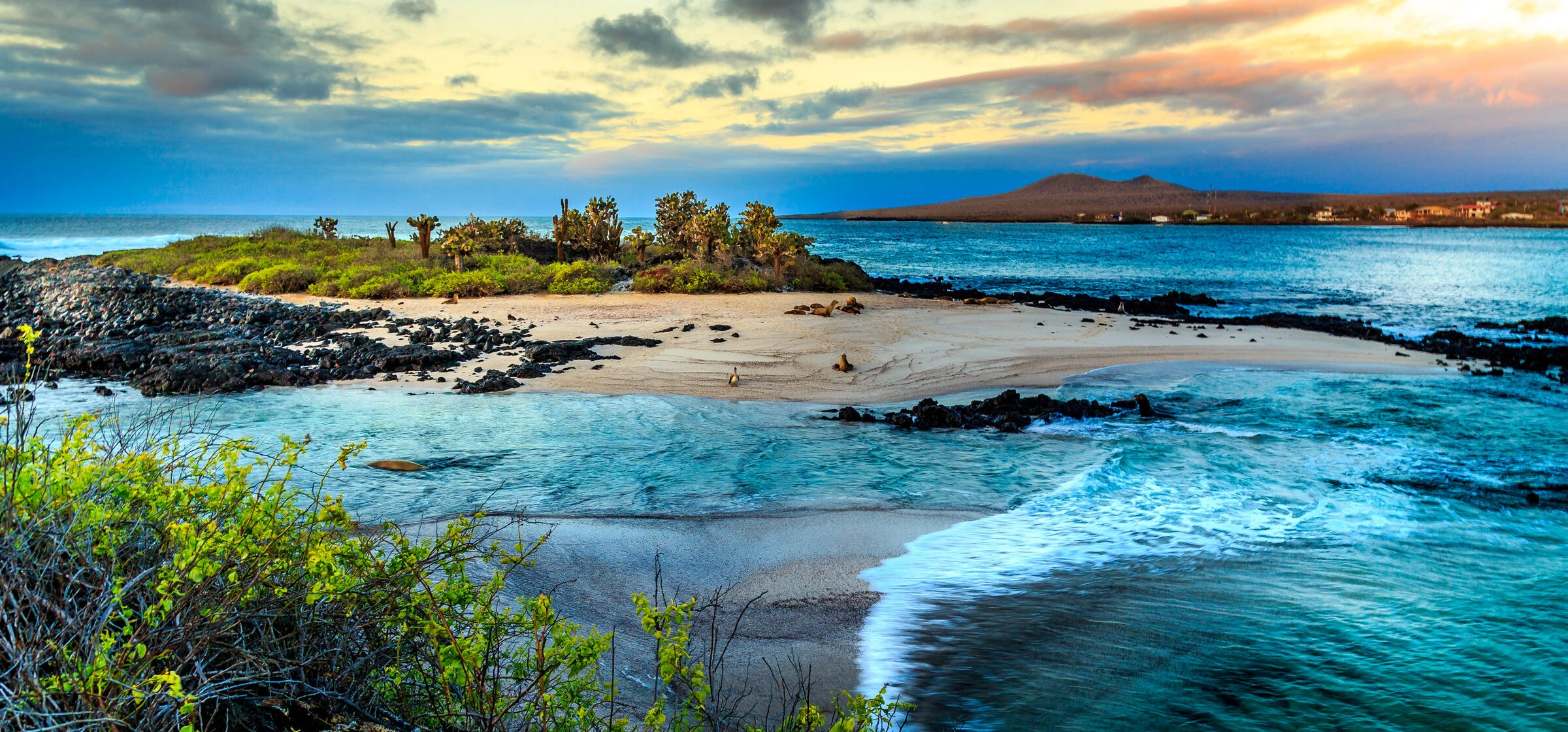
The largest island, still volcanically active, and the wildest of the three. You can ride the volcanic rim by mountain bike and kayak the lava channels at Tintoreras, where white-tipped reef sharks rest in the shallows.
The Galápagos is one of the most tightly regulated destinations on earth. Almost every planning decision runs into a rule.
Every vessel is assigned a fixed fortnightly circuit and may not return to the same visitor site within fourteen days. Weeks one and three sail one variant, weeks two and four another. Which islands you see is decided by which week you sail, not by which ship you like.
Most landing sites are reachable only from a live-aboard vessel; a handful can be done by day boat from a hotel. Land-based gives more space, more flexibility and no seasickness. A hybrid does both. This decision shapes the trip more than the choice of operator.
The National Park entrance fee is $200 per foreign adult, payable on arrival, and clean US cash is the reliable method. The INGALA transit control card is a further $20, now registered online before your domestic flight and checked on the way in and the way out.
The ships worth being on carry sixteen to thirty-two guests. A single sailing is a handful of cabins. Combine that with fixed fortnightly routes and the window for a specific itinerary in a specific week is narrow.
Two of those days are travel. Five is the practical minimum and most people should plan six to eight in the islands. Coming this far for three days of landings is the one decision travelers reliably regret.
People fall for a vessel, book it, then discover it does not go where the penguins are. Decide what you most want to see, find the weeks that reach it, and pick the ship from what is left.
The Galápagos is not a three-day extension. It needs its own week, its own flights and its own arrival day. Bolting it onto another country usually shortchanges both.
Baltra and San Cristóbal are different islands. The flight follows the vessel, never the other way round.
These are the two highest-demand months, and a sixteen-guest yacht in a fixed route week has very little to give. If your dates are school holidays, the planning starts a year out.
Our published routes are active and land-based, moving between the inhabited islands. Small-ship expeditions are designed to order.
Longer reads on the islands, the vessels, and how to choose between them.
The vessel or the lodge is most of the trip here. A few we have put clients on and would again, to show the range rather than to narrow it.
Two yachts: the Grace at sixteen guests and the Evolution at thirty-two. Known for the calibre of their naturalist guides, and for keeping the expedition feeling intact alongside the comfort.
Twenty-guest yachts with private balconies and a genuine conservation commitment, including Origin. The sustainability is structural rather than a brochure line.
The most refined option at sixteen guests, with butler service and design-forward interiors. As close to private yacht cruising as the islands allow without losing the wildlife access.
Land-based on Santa Cruz, with private guided excursions. The right answer for families, for anyone prone to seasickness, and for travelers who want space at the end of each day.
The only beachfront hotel in Puerto Ayora, built low against the volcanic rock along the shore. Six suites open straight onto the water; the rest share porches and hammocks a short walk from the sand.
On the equator there is no off season. There are two seasons, and they suit different travelers.
| Window | What It’s For & What to Expect |
|---|---|
| December to May | Warmer water, calmer seas, clearer visibility. The best snorkeling window, with baby sea lions and land birds nesting. |
| June to November | Cooler and rougher on the water, but nutrient-rich. Whale sharks arrive, penguins are most active, and humpbacks pass through. |
| December and June | The two highest-demand months. Holiday and school-break weeks on sixteen-guest vessels need the longest lead time. |
| Any month | Wildlife is present year-round. Which species you see changes; whether you see wildlife does not. |
Whether you work with us or not, these are worth asking before committing significant funds.
Ask for the site list, not the region. Because the Park assigns fixed fortnightly routes, two sailings on the same ship two weeks apart can visit largely different islands.
Baltra and San Cristóbal are different islands. This determines your domestic flight, and it should be confirmed before anything is ticketed.
Sixteen to thirty-two is the range worth being in. Ask how many naturalists accompany the group and whether landings are timed to avoid other vessels.
The $200 National Park entrance fee and the $20 transit control card are almost never in the package price, and the Park fee is most reliably paid in clean US cash on arrival.
First-hand experience, or a trusted colleague’s direct experience, is the standard. “I’ve heard great things” is not sufficient.
It is a year-round destination. December to May brings warmer water, calmer seas and the best snorkeling, with baby sea lions and nesting land birds. June to November is cooler and rougher but richer in marine life, with whale sharks, active penguins and humpbacks passing through. Neither is better. They suit different priorities.
The best small vessels carry sixteen to thirty-two guests, so a single sailing sells out quickly, and December and June are the highest-demand months. Because the National Park assigns each ship a fixed fortnightly route, the islands you want may only be available on certain departure weeks. That is the real reason to book early.
Very well. Land-based and hybrid trips suit families best: more space than a yacht cabin, no early departures unless you want them, and no seasickness risk. The wildlife is visible at close range from the first morning, which holds children’s attention in a way few destinations manage.
Our published Galápagos Multisport journeys start at $8,900 per person for the eight-day route and $10,200 for the ten-day route. Small-ship expedition cruising varies widely by vessel and cabin. Budget separately for the $200 National Park entrance fee and the $20 transit control card, which are per person and not included in any package.
It is active rather than strenuous. You get wet, you walk on uneven volcanic rock, and you move between ship and shore by zodiac. Snorkeling is central. None of it requires unusual fitness, but it is not a poolside holiday and the days start early.
One of us personally owns your trip from the first conversation to the last night.
Tell us what you most want to see and which weeks you have. We will work out which routes reach it and what is still open.