Destination
Nepal
Tigers at a hundred and fifty meters. Everest at eight thousand eight hundred.
Tigers at a hundred and fifty meters. Everest at eight thousand eight hundred.
Nepal is two countries stacked on top of each other. The floor of the Terai jungle sits at about a hundred and fifty meters. Everest is at 8,848.86.
Down in the Terai, Bardia National Park holds a tiger population comparable to Chitwan’s and receives roughly a thirteenth of the visitors. You track on foot, from a hide or a riverbank, and the quiet is the reason it works.
Above it, the Khumbu and the Annapurnas are the most walked mountains on earth, which does not make them any less serious. The altitude is real, the weather closes the airstrips, and the schedule has to bend around both.
Our journeys here do both, in that order, because arriving at altitude after a week in the jungle is easier on you than the reverse.
Build the buffer before the flight home: Lukla has no instrument approach, so fixed-wing aircraft need around five kilometers of visibility to land and helicopters need about one. Flights are canceled routinely, not exceptionally. We put spare nights in Kathmandu at the end of every Khumbu itinerary, and we do not book an international departure the day you are due out of the mountains.
Three parts of the country separated by more than eight thousand meters of vertical, and by about an hour in a small aircraft.
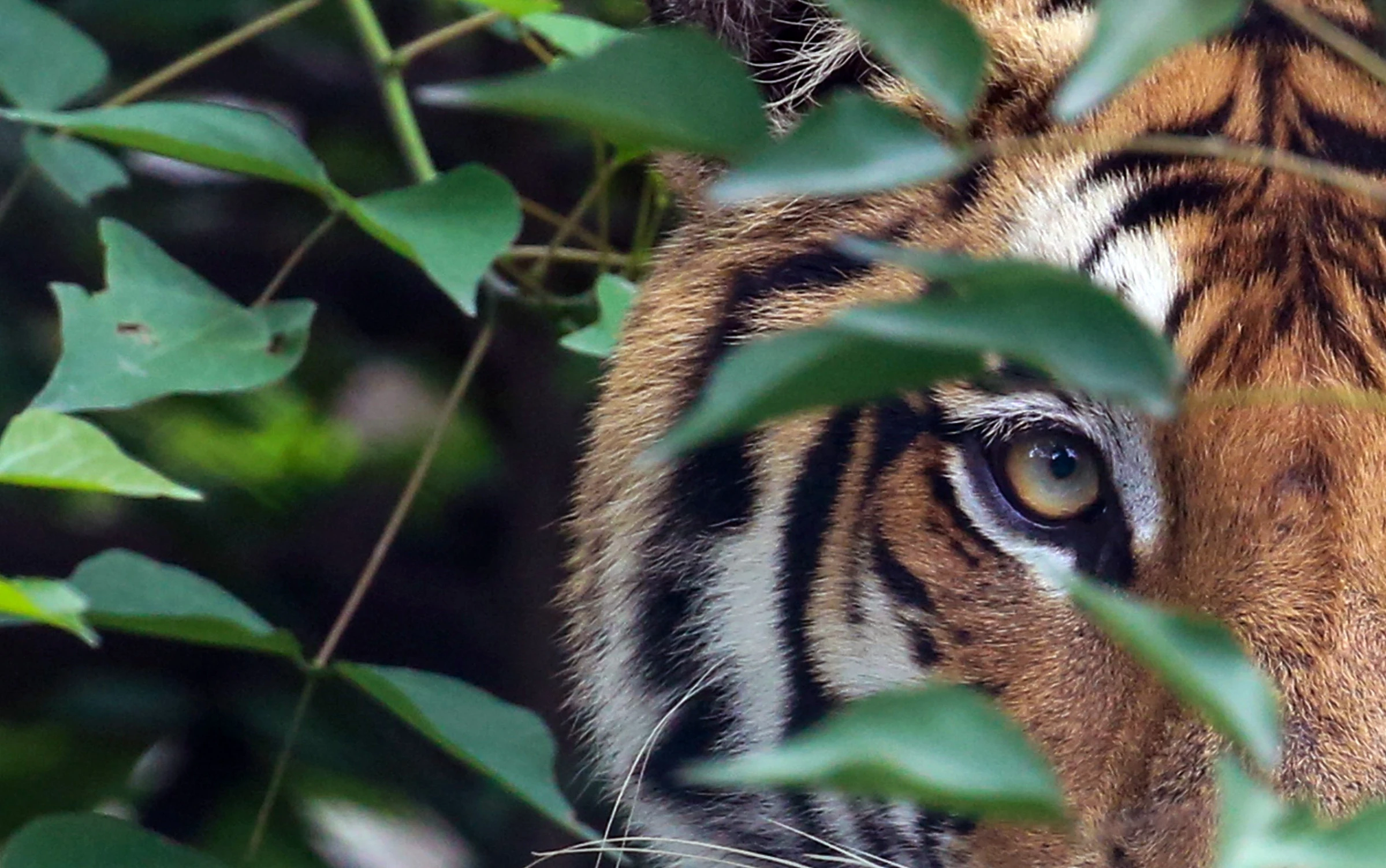
Lowland sal forest and grassland in western Nepal, on the eastern bank of the Karnali and bisected by the Babai. Tiger tracking here is done on foot and from hides. Comparable tiger numbers to Chitwan, a fraction of the people.
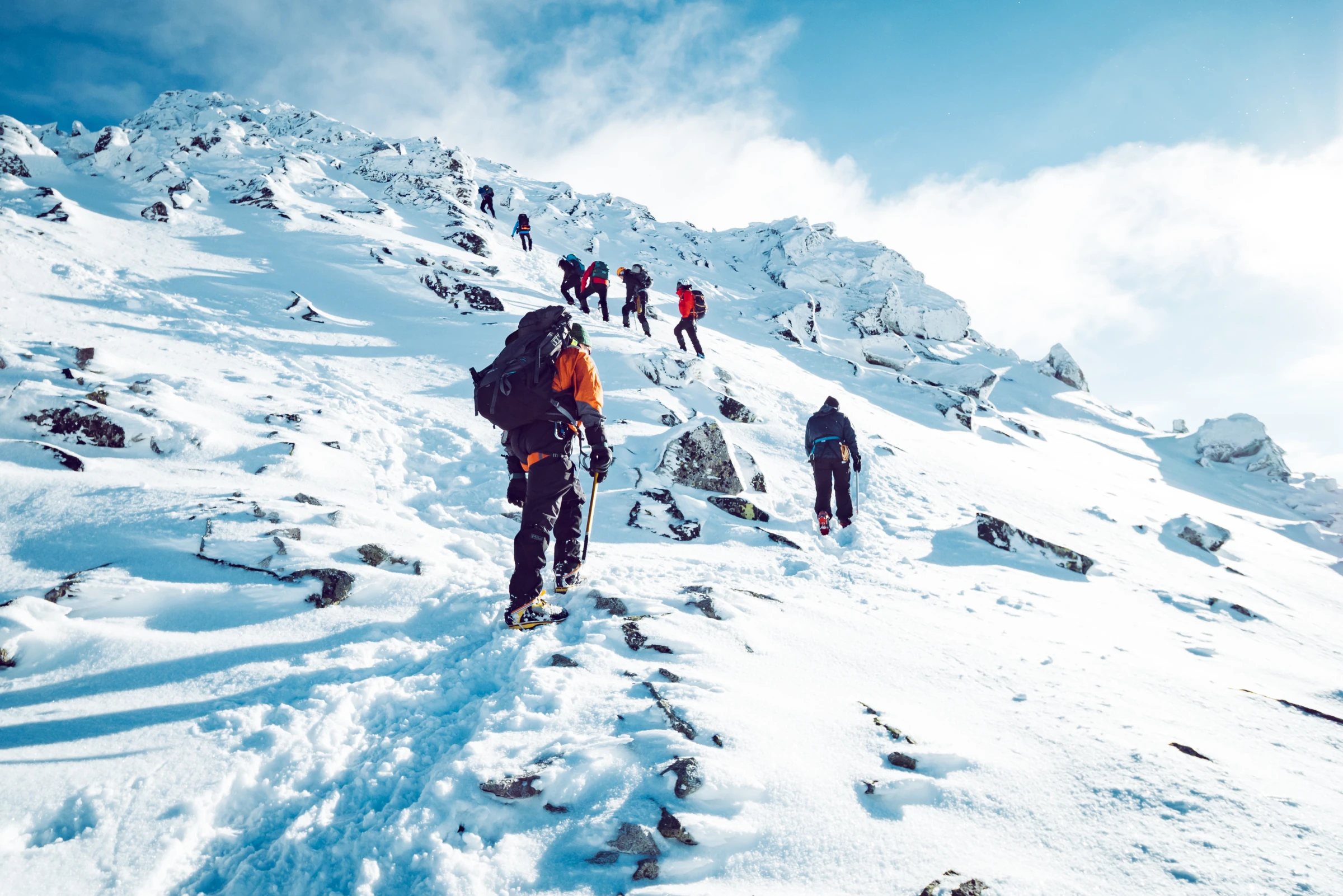
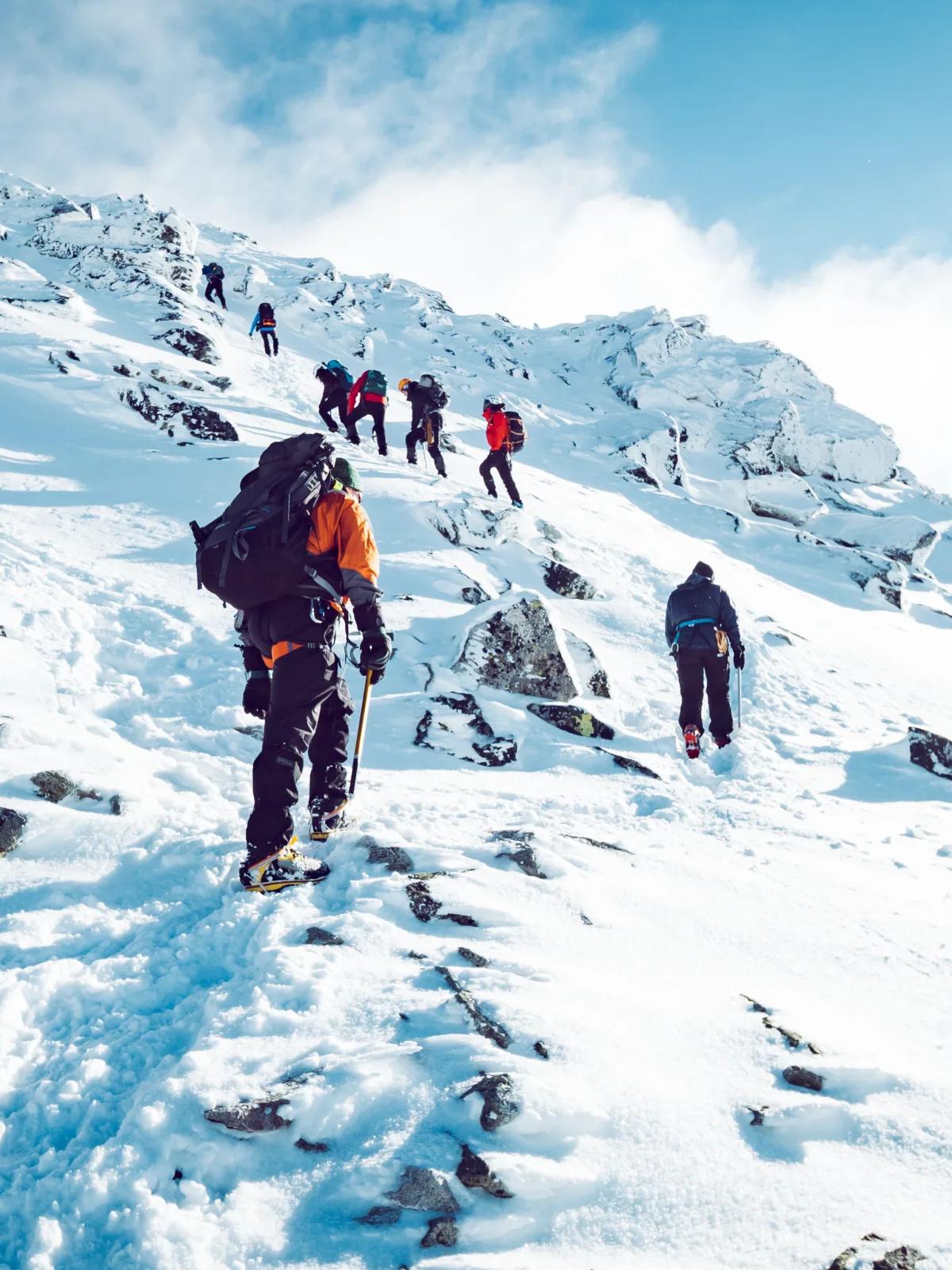
Lukla, Namche Bazaar, and the long walk up the valley toward Base Camp. Sherpa villages and monasteries the whole way. Twelve days minimum if it is going to be done properly.
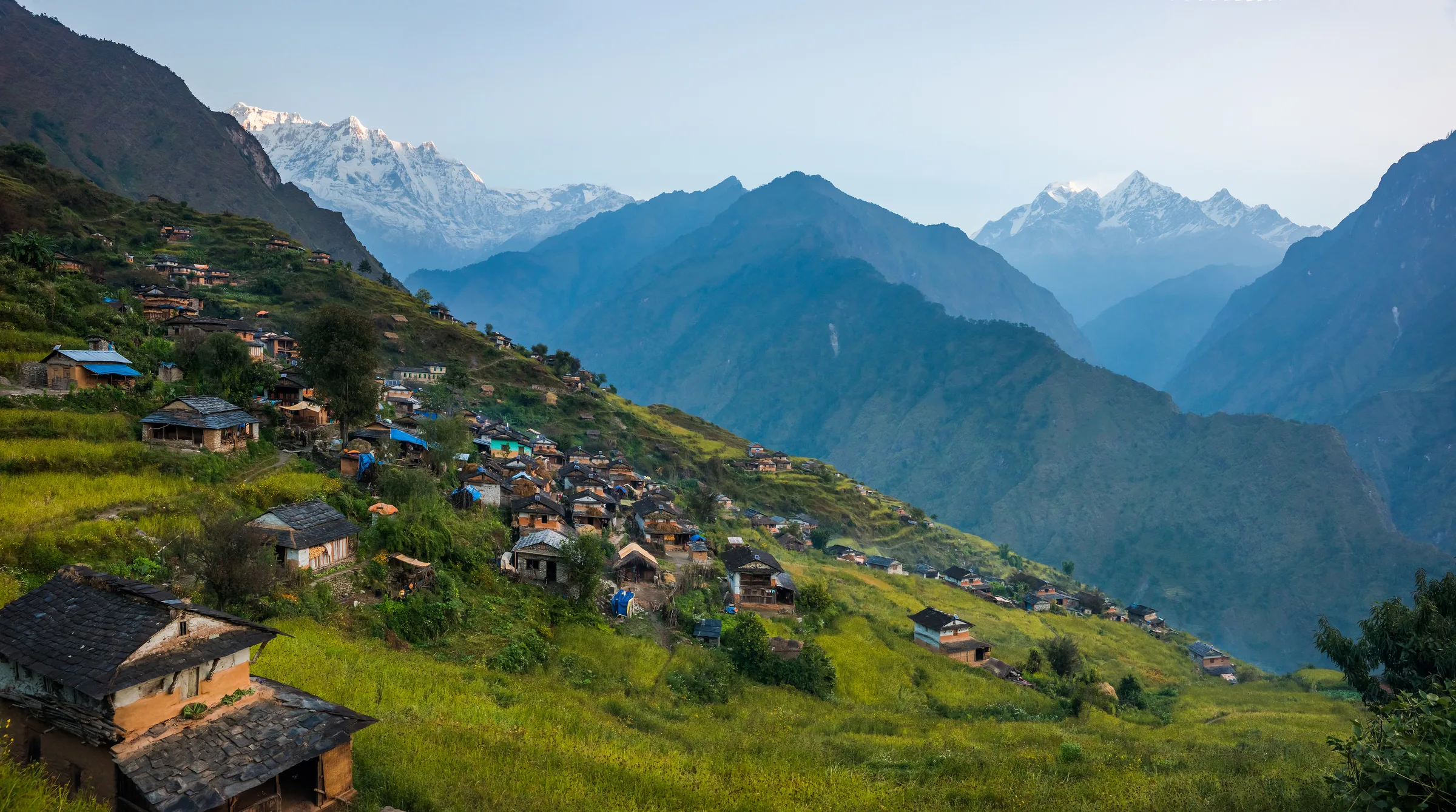
Reached from Pokhara, and gentler on the body than the Khumbu. Lodge-to-lodge walking beneath the massif, with rhododendron forest in spring and the option to go as high or as low as suits you.
Nepal punishes tight schedules more than most places. Almost every hard-won lesson here is about slack.
There is no instrument approach, so landings are visual. Fixed-wing aircraft need roughly five kilometers of visibility and helicopters about one, which is why choppers fly on days that ground everything else. In peak season, flights are often moved from Kathmandu to Manthali in Ramechhap, four to five hours away by road.
Kathmandu sits at 1,400 meters and Base Camp at 5,364. Two nights at Namche is the accepted minimum and a properly built Everest trek runs twelve days or more. Trips that compress this are the ones that end early.
Commercial helicopter flying over Sagarmatha National Park has been the subject of an unresolved dispute between the park, local municipalities and the civil aviation authority since the start of 2025, and operations have been repeatedly suspended. Anything involving a helicopter in the Khumbu has to be confirmed against the rules in force for your dates.
Sightings track the water. Mid-October to mid-December works as the land dries out, and February to June is the strong window, with March and April the peak as the grass is cut and animals concentrate at the rivers.
Under twelve days there is nowhere to put the acclimatization, and the two nights at Namche are the first thing a compressed schedule loses. That is the wrong economy on a trip this size.
Lukla cancels routinely. Two spare nights in Kathmandu at the end is not padding, it is the difference between a delay and a missed long-haul ticket.
Chitwan is closer to Kathmandu and far easier to reach, and that is exactly the problem. Bardia holds comparable tiger numbers with roughly a thirteenth of the visitors. If you have come this far for a tiger, go west.
June to September brings cloud, leeches on the lower trails and mountains you cannot see. Some routes work in the rain shadow, but the classic ones do not, and we would rather move your dates than sell you a wet week.
Air support in the Khumbu is regulated, contested and weather-dependent. It is a useful tool when it is available and a poor foundation for a plan that has no slack in it.
Both of our Nepal routes run jungle first and mountains second. Priced to order, because air support and lodge standard move the number considerably.
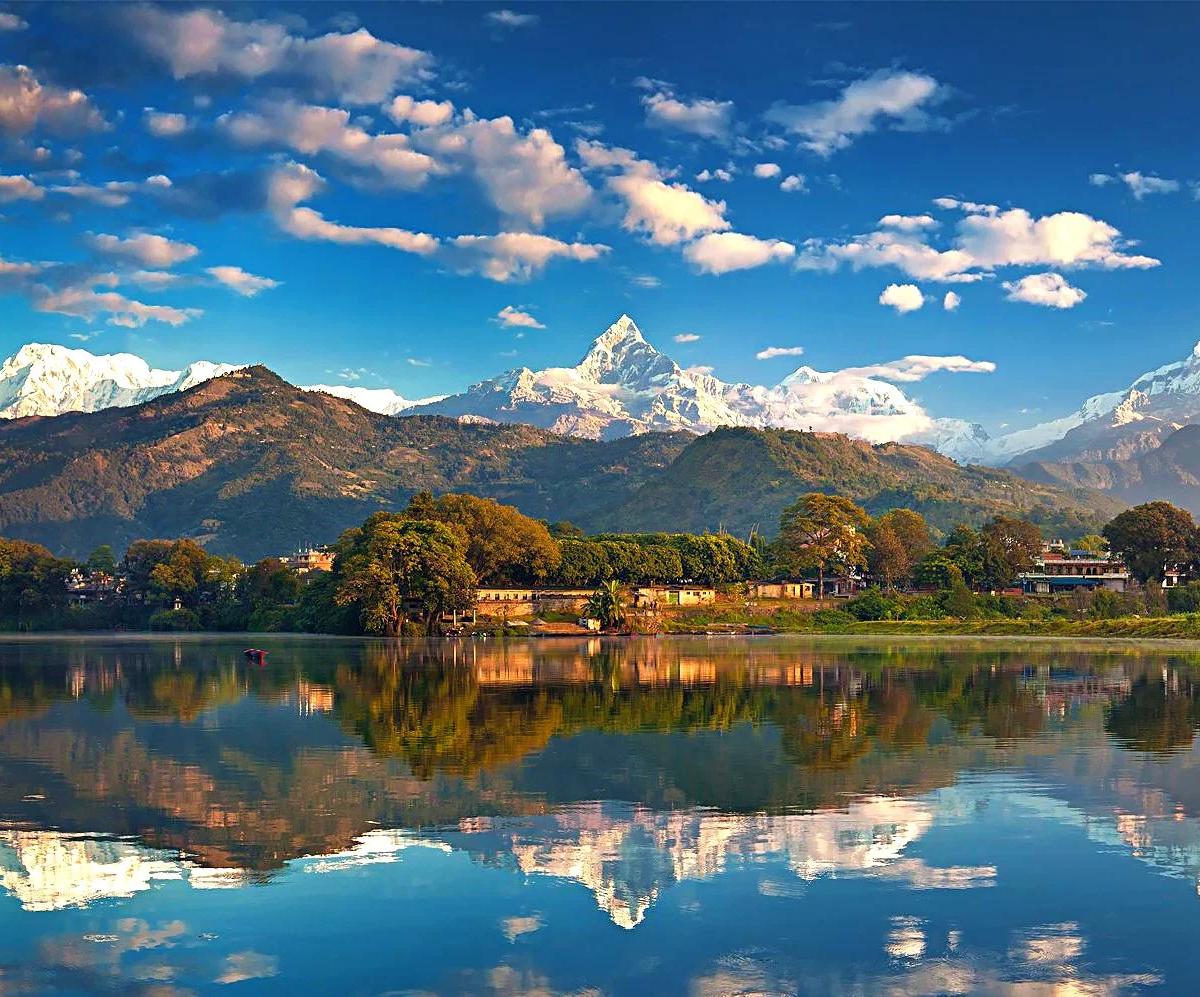
Examples rather than a fixed list, to give you a sense of the kind of property we use and why a Nepal itinerary tends to be built around them.
Twenty en-suite rooms in Tharu style on the edge of Bardia, running almost entirely on solar with its own vegetable garden. The name traces back to the 1960s camps that replaced big-game hunting with photography. Walking, jeep and river safaris.
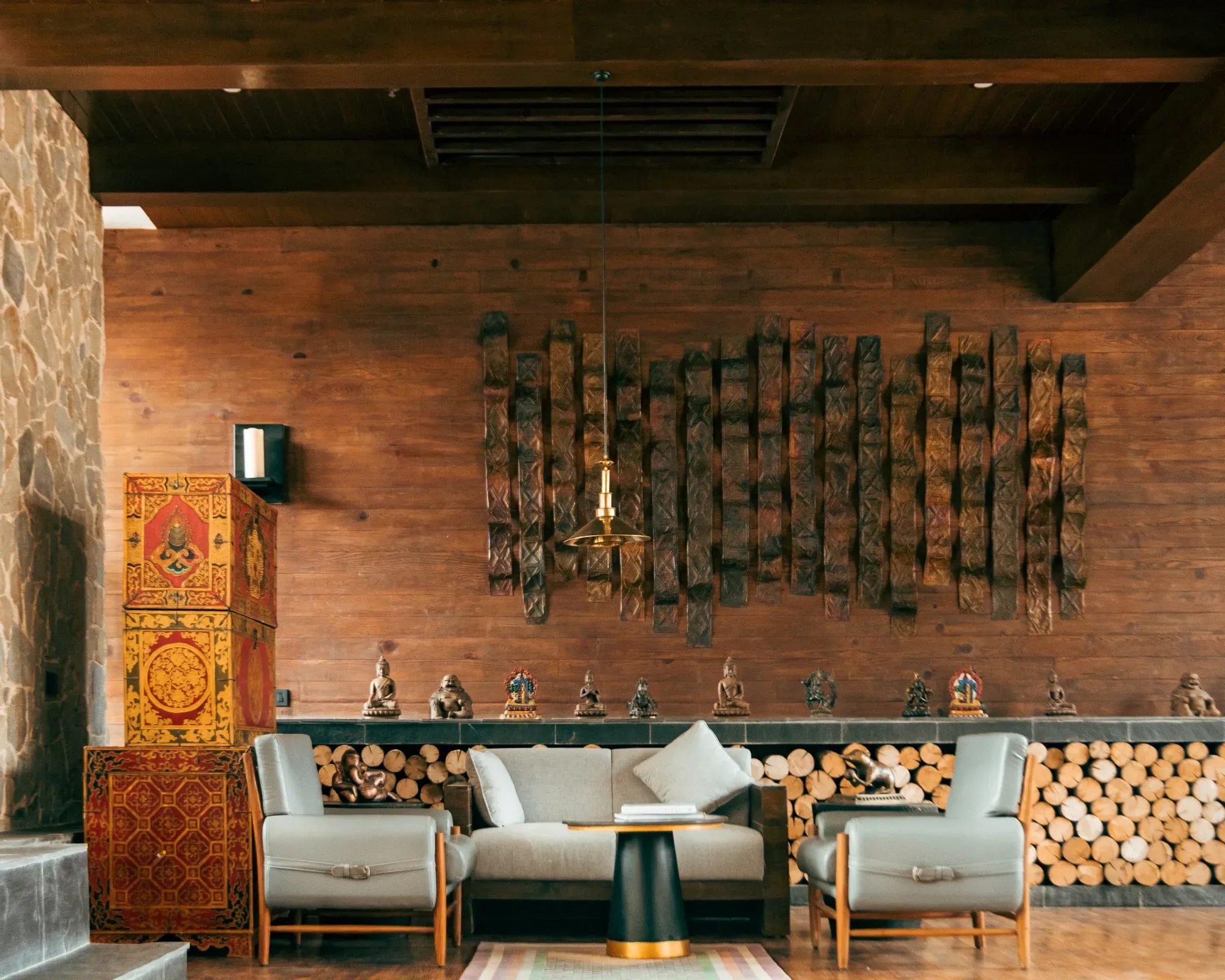
Twenty-nine suites at 2,800 meters above the Kali Gandaki gorge, between Annapurna and Dhaulagiri. Bill Bensley design, and fully all-inclusive down to permits and guided excursions. Named the world’s best luxury hotel by Robb Report in 2026.
The first proper lodge chain in the Khumbu, with houses at Lukla, Phakding, Monjo, Namche and Deboche. Heated rooms and private bathrooms at altitudes where a teahouse bunk was once the only option, which lets one standard carry a whole trek.
The network behind lodge-to-lodge walking in the Annapurna foothills, from Dhampus at 1,650 meters up to Ghandruk at 1,940. Stone houses built to the village pattern, with private rooms and hot showers, and your bags carried ahead to the next one.
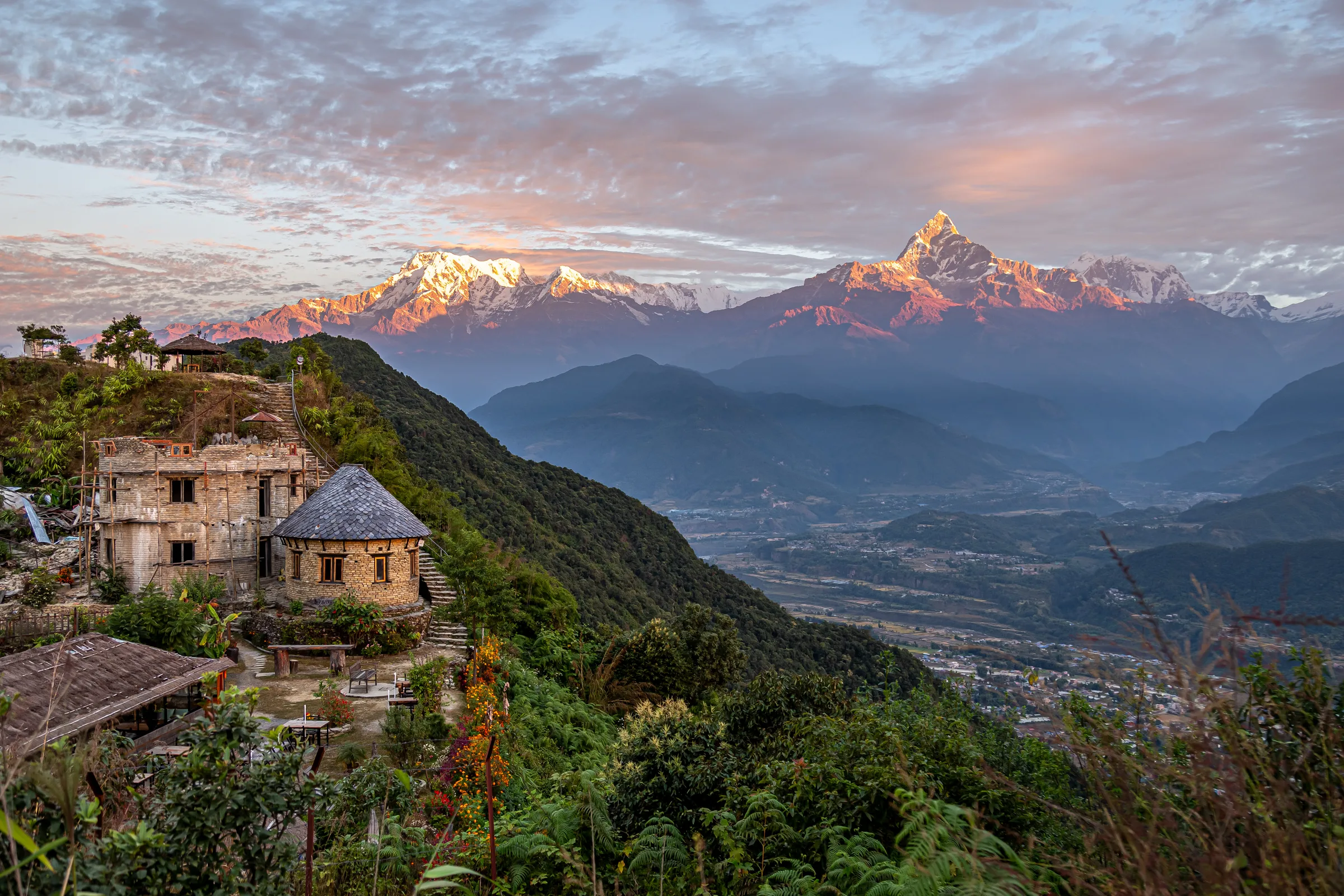
On a ridge half an hour out of Pokhara, looking across at the Annapurna range and well clear of the town. The natural first or last night of anything in the Annapurnas.
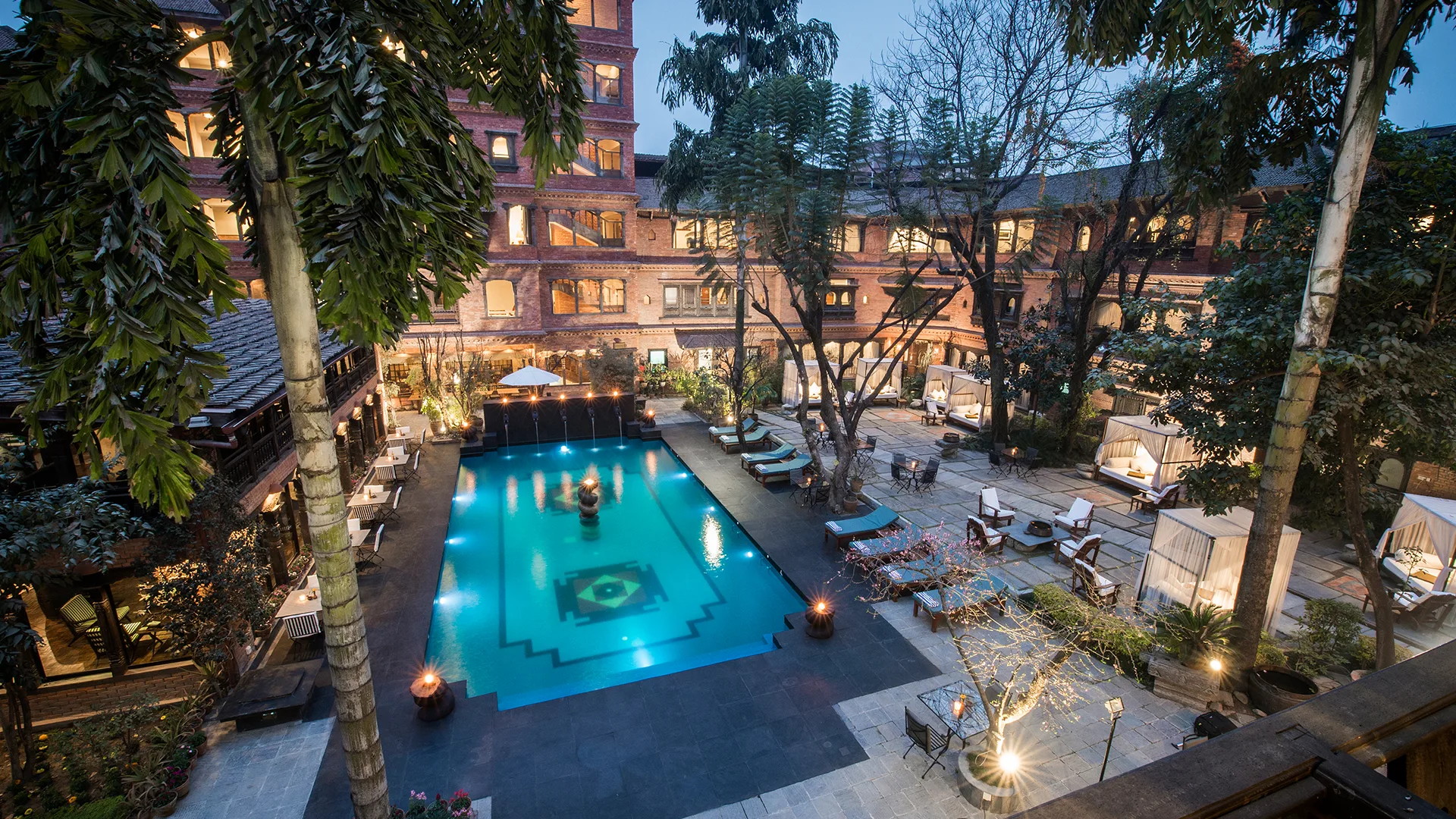
Built around one family’s effort to rescue Newari woodcarving from demolition sites across the valley, and unlike any other hotel in the country. Krishnarpan serves a ceremonial Nepali dinner that runs to twenty-two courses. The right place for the buffer nights every Khumbu itinerary needs.
The mountains and the jungle do not peak at quite the same time, which is what makes the combination trips worth sequencing carefully.
| Window | What It’s For & What to Expect |
|---|---|
| October to November | The clearest mountain weather of the year, after the monsoon has washed the air. The busiest weeks on the trails, and the best of them. |
| Mid-October to mid-December | Bardia opens up as the land dries. Animals move toward the Karnali and the Babai, and the grass is still high enough to make it interesting. |
| December to January | Cold and clear at altitude, quiet on the trails. Short days and genuinely cold nights in the lodges. |
| February to April | Spring trekking, warmer, with rhododendron in flower lower down. This is also the peak window for tigers in Bardia, especially March and April. |
| May | Warm and hazier. Still walkable, with the mountains less reliably visible. |
| June to September | Monsoon. Cloud, rain and leeches on the lower trails. Not a classic trekking season. |
Whether you work with us or not, these are worth asking before committing significant funds.
You want two at Namche as a minimum, named explicitly. If the answer is vague or the trek is under twelve days, the acclimatization has been quietly removed.
The answer should be specific: how many spare nights are built in, who rebooks, and whether a helicopter is a fallback. Cancellations are routine, so a plan without one is not a plan.
If so, ask what the current regulatory position is for your dates. Commercial helicopter flying over Sagarmatha National Park has been disputed and suspended at various points since 2025.
Bardia and Chitwan are very different propositions. Ask why one was chosen, and whether the dates fall in a window when sightings are actually strong.
High-altitude trekking is excluded from many standard policies, and helicopter evacuation in the Khumbu is expensive. You need coverage that specifically names altitude, emergency evacuation, trip interruption and supplier default.
October and November are the clearest months for the mountains, after the monsoon has cleared the air. March to May is the spring trekking season, warmer with rhododendrons in flower but hazier. For tigers in Bardia, mid-October to mid-December and February to June work, with March and April the strongest. June to September is monsoon and not a classic trekking window.
October and November are the busiest weeks on the trekking routes and the tightest for domestic flights and lodges. Six to nine months is comfortable for autumn. The bigger constraint is usually building enough slack into the schedule rather than securing the beds.
Bardia works well: low elevation, genuine wildlife, and short flexible days. High-altitude trekking is a different question and depends entirely on the child. Kathmandu valley and Pokhara make a strong family trip without going high at all.
Both of our Nepal journeys are priced to order rather than published, because the cost moves considerably with air support, lodge standard, and how much slack the schedule carries. We give you a straight number for your dates before you commit to anything.
It depends which Nepal. Bardia asks for walking in heat and patience in a hide. Everest Base Camp is a sustained twelve days or more at altitude with two non-negotiable acclimatization nights at Namche. Lodge-to-lodge in the Annapurnas sits between the two and can be paced gently.
One of us personally owns your trip from the first conversation to the last night.

Tell us whether you have come for the tiger or the mountain, and how many days you can give it. We will be straight with you about what fits.